
1
Five channels, two half spaces
Two outside channels along the touchlines, the central channel in the middle, and between them, the half spaces. On the sheet they’re marked out, so every player knows which channel they’re in.
Tactics sheets · roll of 25 sheets, 80 × 60 cm
Full rangePacks
Build my pack
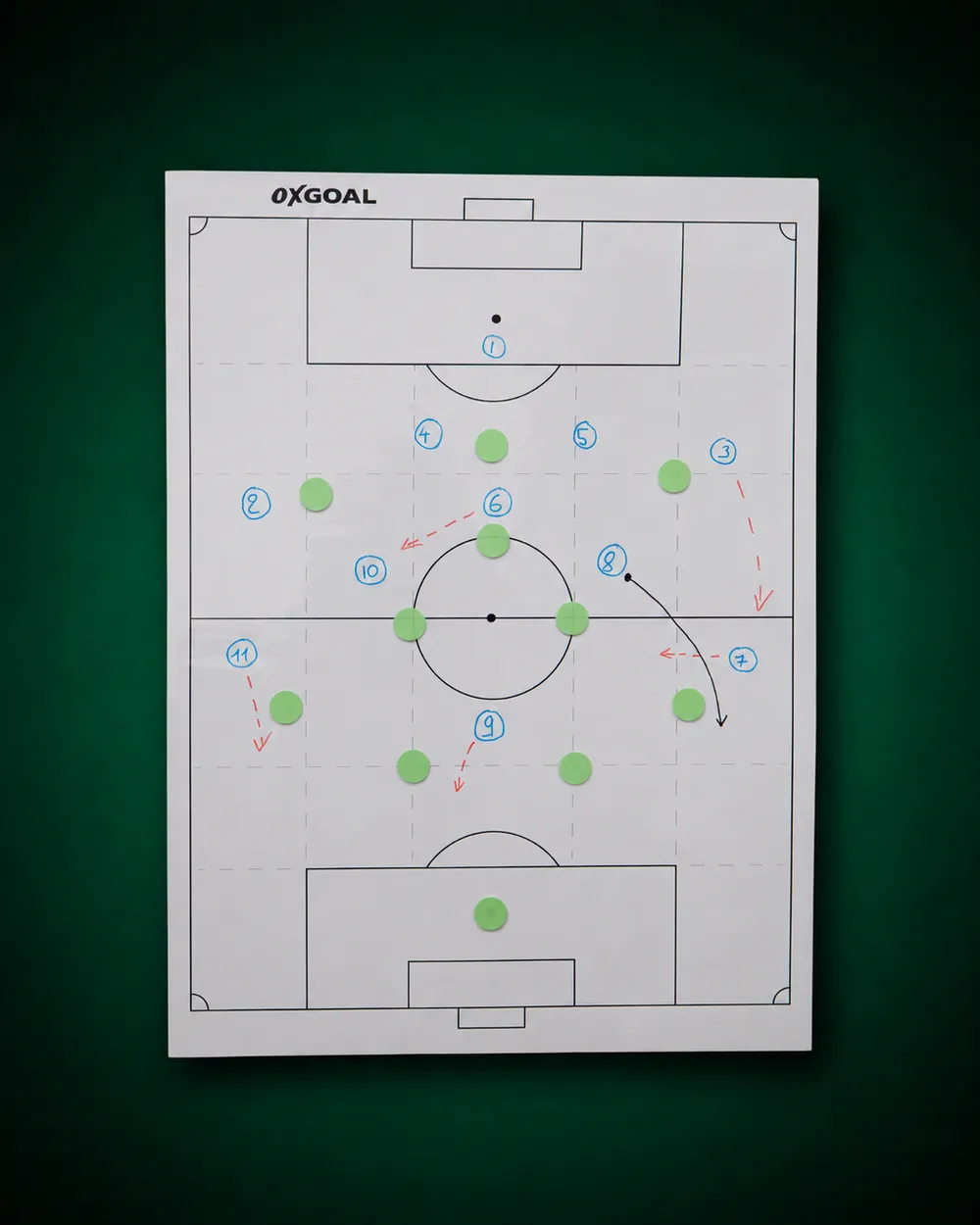
The full football pitch marked out in five channels: every player sees their zone on the wall, and your positioning instructions can be read at a glance. 80 × 60 cm, the sheet stays up by static electricity and wipes clean with a cloth.
Three coaches, filmed in their dressing rooms, show how they use the sheet to prepare their matches.
 54 sFrench subtitles
Three senior teams to prepare. The line-up with the numbers, the instructions at the bottom of the sheet, the half-time adjustments. Wipe it clean, and the sheet serves the B team the following week.
 52 sFrench subtitles
He prepares his set pieces the day before, at home. On match day, the sheet goes up on any dressing room wall.
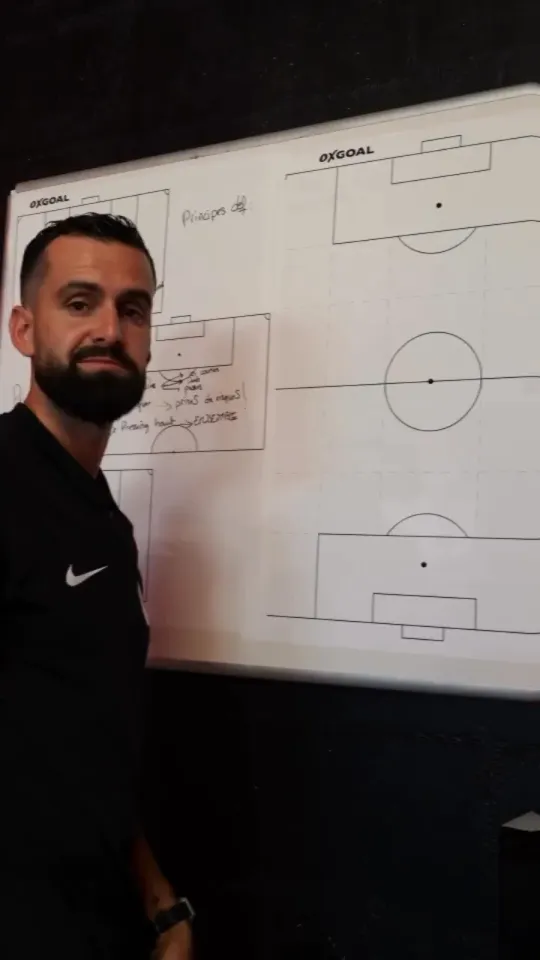 1 min
His team talk before the 3rd round of the Coupe de France: the line-up and the game principles on the same sheet.
The lines of the penalty area and the six-yard box, extended over the whole pitch, divide the sheet into five channels. The two half spaces are the ones between the wing and the centre: the zone that positional play sets out to occupy.
Two outside channels along the touchlines, the central channel in the middle, and between them, the half spaces. On the sheet they’re marked out, so every player knows which channel they’re in.
Between the opposition’s midfield and defence, the half space is the hardest zone to cover: too wide for the central midfielder, too far inside for the full-back. A player who receives there can turn and face goal.
From the half space, the player on the ball sees both the goal and the flank. They can find the winger, combine through the middle, play in behind or switch play. On the sheet, you draw the four arrows and every player sees theirs.
Inside the box, the half space leads to the goal line, level with the six-yard box. That’s where the cut-back towards the penalty spot comes from, a pass that defenders facing their own goal struggle to cut out.
The grid gives staff and players a common reference. Each instruction points to a specific channel, marked on the wall, that every player can find at a glance.
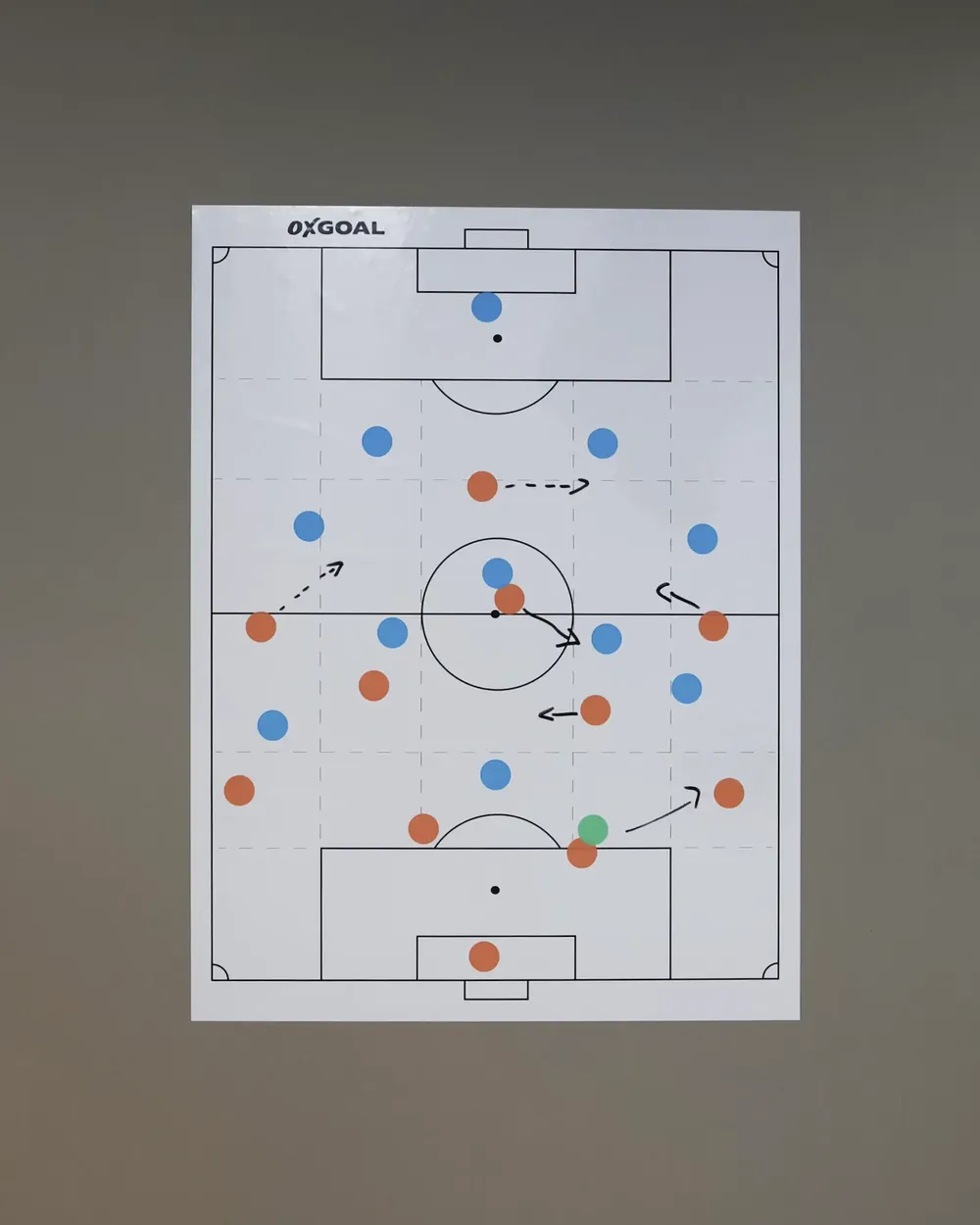
A classic rule of positional play: never more than two players in the same channel. On the sheet, everyone sees where they need to be.
The dotted lines show the line to break. A pass into the half space takes out the first line of pressure.
Three players in three neighbouring channels: the overload on the flank takes two strokes of the marker.
Your midfielders protect the half spaces and push the opposition out wide. Everyone sees the zone they have to cover.
The same pitch, two uses: the full pitch for the match team talk, the half spaces for positional play. Both can be combined in one pack.
One roll, one dressing room wall, one dry-erase marker. Three steps and your team talk is up on the wall.
All 25 sheets are pre-cut. Pull and tear one off.
It stays up on its own by static electricity, on a painted wall, a window or tiles.
Dry-erase marker and repositionable counters: one player per channel. One wipe with a cloth and you start again.
Choose a pack, then split your rolls between the pitches you work on. The extras unlock automatically.
The exact measurements, the material and what comes in the roll.
Answers to the questions coaches ask us most often.
Your system of play, set pieces, the indoor court: they all combine with the half spaces in one pack.